Serengeti National Park
One of the most celebrated wildlife sanctuaries on Earth — spanning nearly 15,000 square kilometres of sweeping grasslands, acacia-dotted woodlands, and river-lined corridors. The stage for the greatest wildlife show on the planet.
The Serengeti in Numbers
Endless Plains
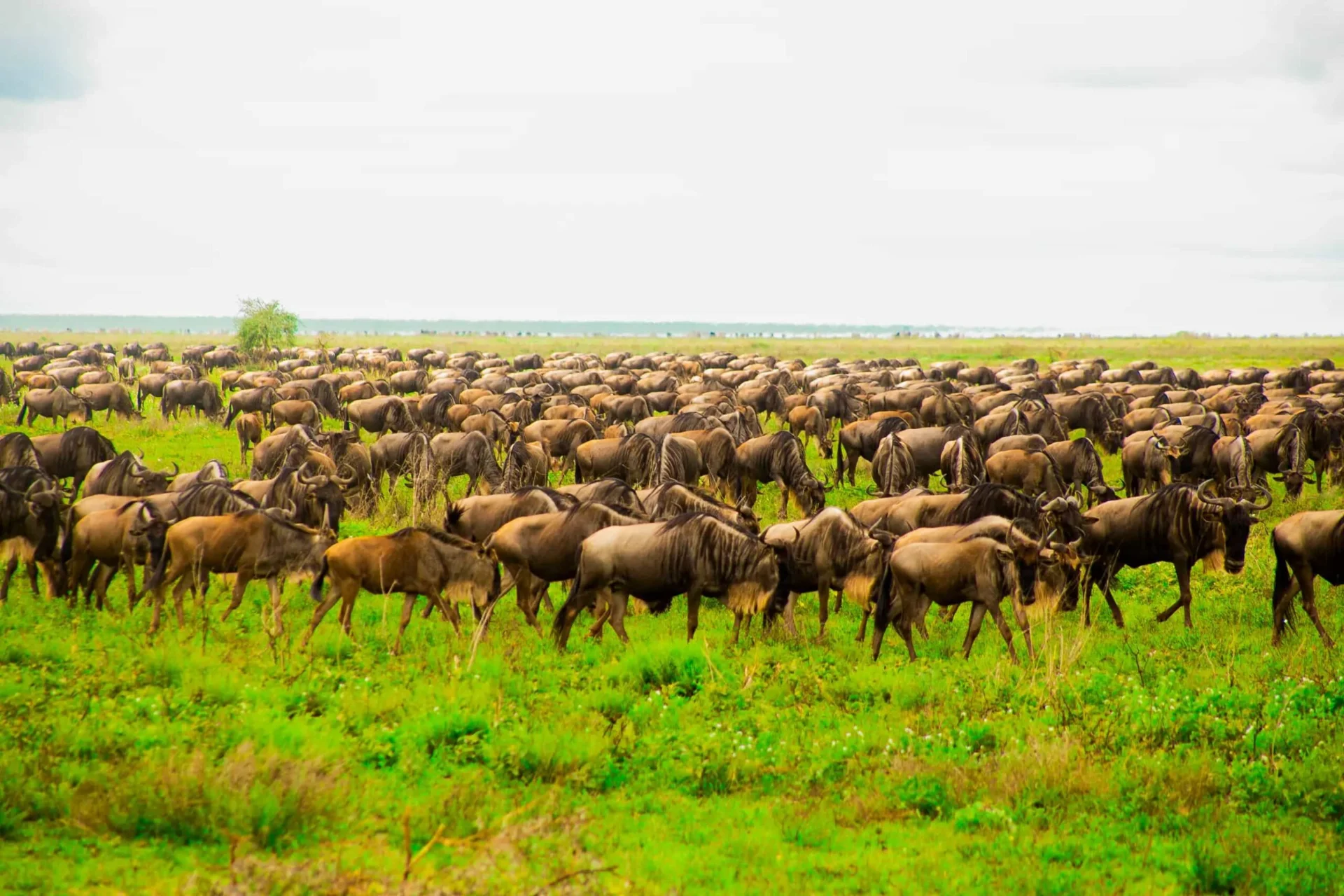
The name "Serengeti" comes from the Maasai word siringet, meaning "endless plains." Rolling grasslands stretch to every horizon, broken only by rocky kopjes and the occasional flat-topped acacia tree.
This vast ecosystem extends far beyond the national park boundaries, linking with the Ngorongoro Conservation Area to the south and Kenya’s Masai Mara to the north. Together these protected areas form one of the largest and most important wildlife conservation corridors in the world.
Designated a UNESCO World Heritage Site in 1981, the Serengeti is recognized not only for its extraordinary wildlife density but also for the unbroken ecological processes that have continued here for millions of years.
The Great Wildebeest Migration
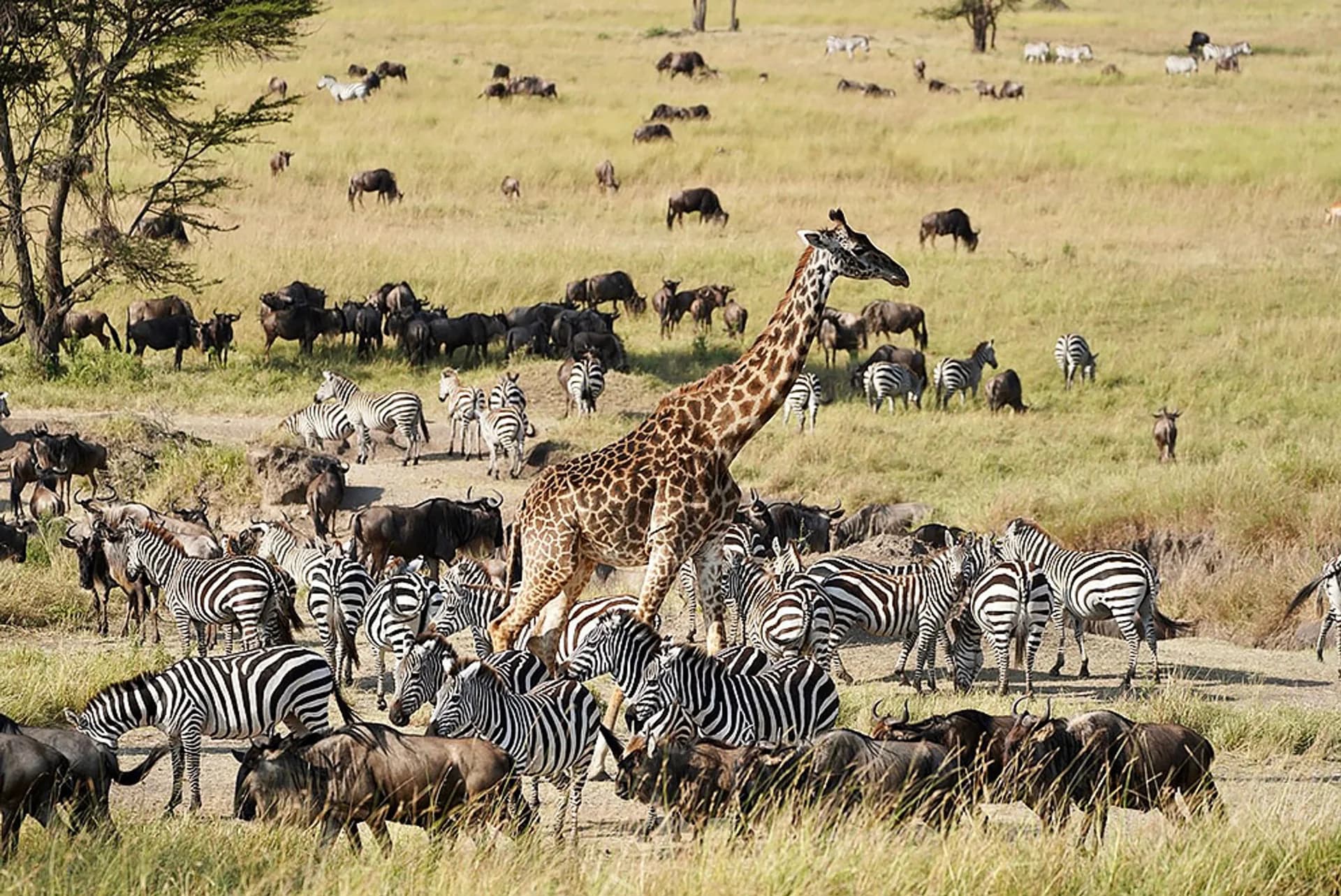
The largest overland migration on Earth — a continuous loop of over two million animals moving through the Serengeti-Mara ecosystem in search of fresh grazing and water.
Calving Season
Herds gather on the southern Ndutu plains. Up to 8,000 calves born daily during peak calving.
Western Movement
The long rains push the herds northwest through the Seronera woodlands and into the western corridor.
Grumeti Crossings
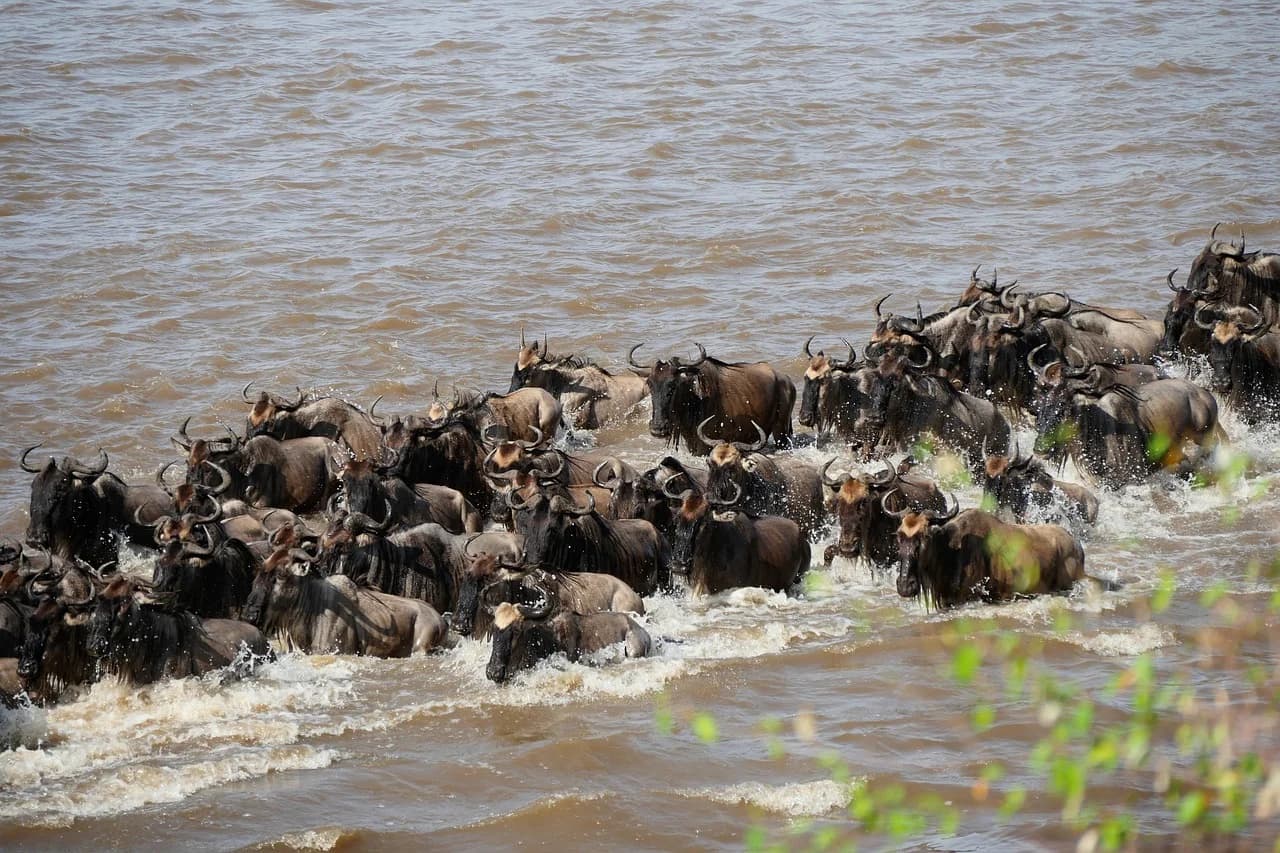
The herds encounter the Grumeti River, navigating crocodile-infested waters on their northward trek.
Mara River Crossings
The iconic Kogatende crossings. Thousands plunge into the Mara River in the most photographed event of the cycle.
What You Will See
The Serengeti sustains one of the highest concentrations of large predators and herbivores in Africa.
Predators
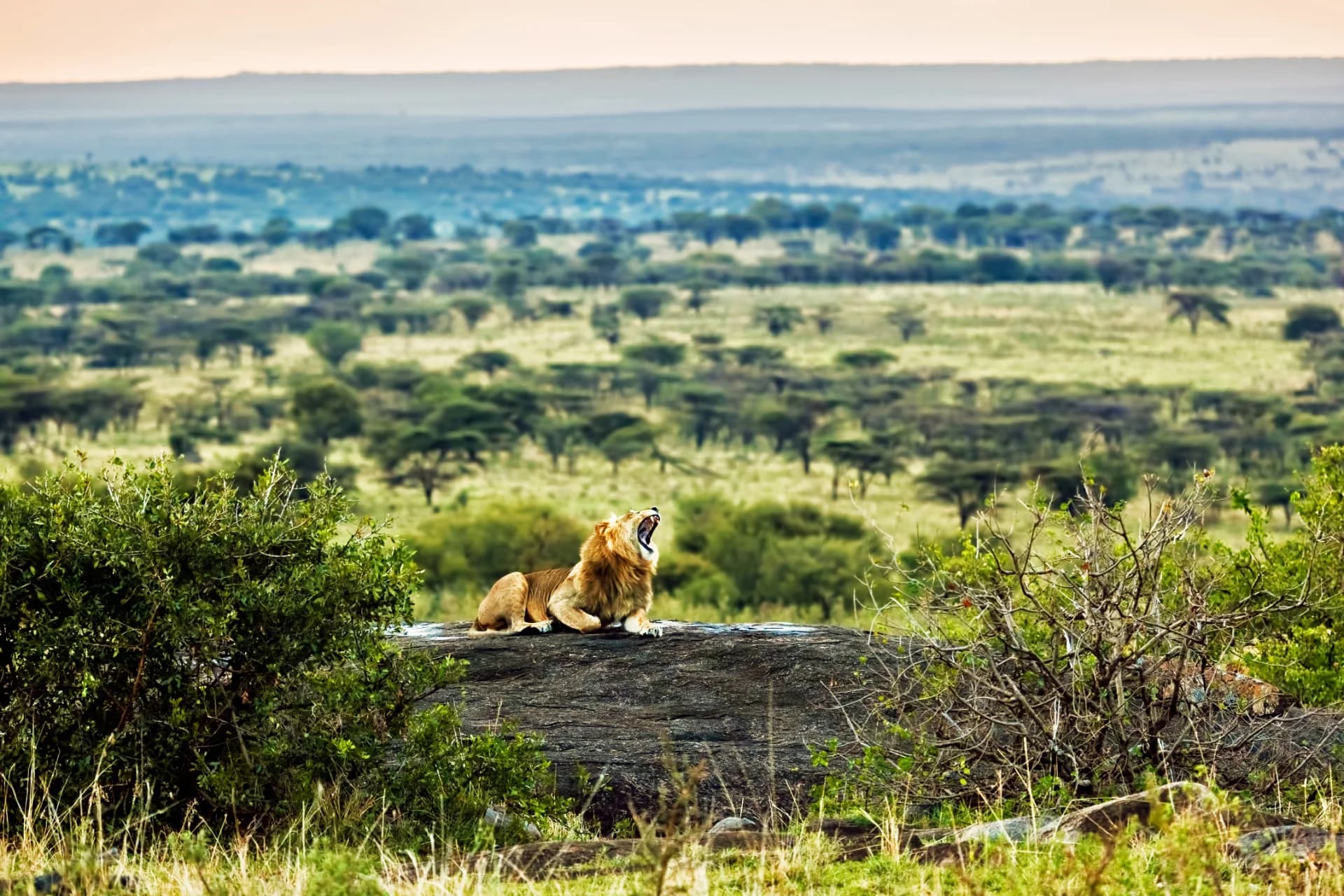
The Serengeti is home to over 3,000 lions, 1,000 leopards, and one of the largest cheetah populations in Africa. Spotted hyena clans number in the thousands, and African wild dogs make seasonal appearances.
The Big Five
Lion, leopard, elephant, buffalo, and rhino — all five are found in the Serengeti. The park’s varied habitats support extraordinary densities of these iconic species year-round.
Birdlife
Over 500 species make the Serengeti a birding paradise — from the secretarybird striding through the grasslands to the lilac-breasted roller and Kori bustard, Africa’s heaviest flying bird.
Serengeti Regions
The Serengeti is not one landscape — it is many. Each region offers a distinct character and wildlife experience.
Southern Plains
Vast short-grass plains stretching into the Ndutu area. The calving grounds of the migration and prime cheetah territory with wide-open views.
Seronera (Central)
The heart of the park — acacia woodland and riverine forest. Year-round game viewing with resident big cats, hippos, and crocodiles.
Western Corridor
The Grumeti River and its surrounding woodlands. The herds pass through here in May–June, with massive Nile crocodiles awaiting at every crossing.
Northern Serengeti
Remote, rugged, and wild. Home to Kogatende and the iconic Mara River crossings. Fewer vehicles, bigger drama, unforgettable photography.